Toll Free: +92-0311-17778-65
Archive for August 28th, 2026
28 Aug

How to Understand Different Types of Solar Inverters
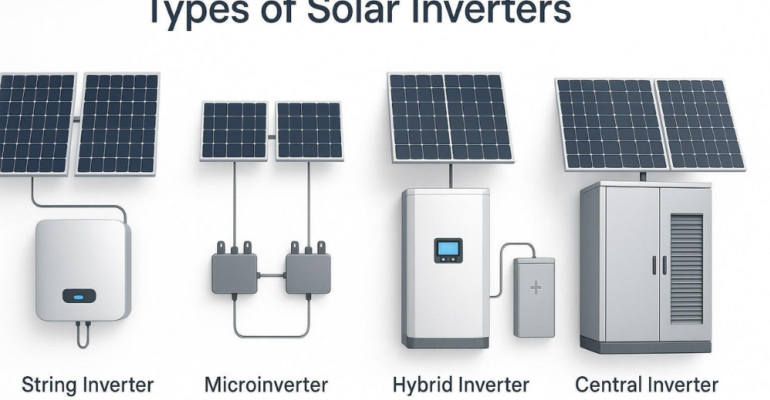
Ignore the solar panel; it is the only thing important. There’s another aspect of the system that’s equally significant. This is the solar inverter. Any solar panel will not power your home without an inverter. Let’s learn simple terms about the kinds of solar inverter in this guide. At the end you will be able to recognize the one which suits you best. What Does a Solar Inverter Do? DC power is generated by solar panels. Direct Current: It is current that flows However, most houses prefer AC electricity power. This is AC power. A direct current to alternate current converter. Your lights, fans and appliances operate due to this. Otherwise, the daily use of solar energy would have been useless. Why Choosing the Right Inverter Matters Inverters can’t all be created equal. There are some which are more effective for small homes. Others are used for big factories or buildings. The wrong type can reduce the performance of your system. It can also be more expensive in the long-term as well. That is when consulting a professional comes in handy. The Lahore based Solar Company Consultants team can assist you based upon your home size and energy requirement. Main Types of Solar Inverters Let’s get into the most frequently used! String Inverters The most commonly used inverters are string inverters. They are easy to create and inexpensive to make. All panels are connected to a single inverter. All panels are joined together in a string. This combined power is then converted to AC by the inverter. Best suited to: Simple roofs and little shade. The downside is that if a panel receives some shading or gets damaged, the entire output of the system suffers. Microinverters Microinverters work differently. A small inverter is used for each solar panel. Each panel produces its own electricity without influencing the other panels. The other shaded panel is not influenced by the shaded panels. The progress is monitored on a panel-by-panel basis. Ideal for: Providing shading on the roof or panels installed on the north/south axis. Downside: They are much more expensive than string inverters. Power Optimizers Power optimizers are a combination of both of the above. They cannot be considered as complete inverters. A small optimizer is attached on each panel. The optimization system fine tunes the power prior to it reaching one main inverter. This central inverter further converts the DC to AC. Ideal for: Homes seeking enhanced performance compared to string inverters, but not as high as microinverters. Hybrid Inverters Battery storage systems are required in hybrid inverters. They control power provided by solar panels. They also control power charging and discharge of batteries. They are capable of switching between solar power, battery storage and grid power. Suitable for: Battery backed houses and businesses. Bad: You have to pay more for the initial item. Central Inverters Central Inverters are large and strong. They are primarily applied to large solar farms or factories. One big inverter supplies power to numerous panels. It has been designed to handle high power loads. For best performance: Large scale solar energy installations, not homes. Comparing the Types: A Quick Look A quick summary: Considered inexpensive and straightforward, String Inverters are a good solution for simple residences. Microinverters are more expensive, but are best suited for roofs with shading. Power Optimizers cost / performance balance. For battery storage systems, Hybrid Inverters are the best choice. For large commercial projects, Central Inverter is recommended. How to Choose the Right Inverter There are a few factors to take into consideration when selecting an inverter. Roof Shape and Shading Microinverters and optimizers are more effective if there is shade on the roof from a building or a tree. Budget If money is a major concern, the least expensive inverter is a string inverter. Battery Plans For users who are planning to install batteries at a later stage, a hybrid inverter would be a more viable option. System Size Central is typically available in bigger systems, such as factories. Why Professional Installation Matters Even the best quality inverter is of no use if it is not installed correctly. This is where the specialty of qualified professionals comes in. CellSol Energy has an experienced staff of engineers and technicians. They will inspect your property prior to acquiring it. Then they decide which one would be suitable for you. Good installation ensures: Maximum power output Longer inverter lifespan Fewer repair issues Safe electrical setup Maintenance Tips for Solar Inverters There are a few things that need to be done to ensure the well-being of inverters. Make sure the inverter area is free from dust and dirt. Look for indicators of error lights or warnings. Have them visit at least once a year to check up. Store the inverter where it’s cool and in shade. Final Thoughts The main of any solar system is a solar inverter. The choice of the right type can impact the savings and performance. No matter the string inverter, micro inverter or hybrid system, all aim to achieve the same objective. You need good power and value for money. When unsure about which to match your home, consult trusted professionals. A reputed Solar Company Karachi can take you through the steps, step by step. FAQs To convert the DC voltage from the solar panels into AC voltage. Converts DC power of the solar panels into AC power for using in the home. Which inverter is best for a shaded roof? Microinverter/power optimizer: Ideal for shady environments. Are hybrid inverters worth the extra cost? Yes, if you are intending to store energy at the present time or into the future. What is the typical solar inverter lifespan? Under proper maintenance, most inverters can be expected to last 10-15 years. Can I install a solar inverter myself? Not recommended. When it’s professionally installed, it will be safe and perform better.