Toll Free: +92-0311-17778-65
Blogs - Cellsol Energy - Page 12
30Nov


WHAT TO KNOW BEFORE INSTALLING SOLAR PANELS
WHAT TO KNOW BEFORE INSTALLING SOLAR PANELS Making the switch to solar power is a big step, but it’s well worth it. Who wouldn’t want a lifetime supply of renewable energy? As more people recognize the value of renewable energy, solar system instalment rates continue to rise. If you’re thinking about installing a solar panel system in your home or business, here are some questions to ask before you begin. CAN YOUR ROOF SUPPORT SOLAR PANELS? If your roof requires repair or replacement within the next few years, it’s best to fix it first. You won’t have to pay extra to disassemble and reinstall a system this way. Your roof must be strong enough to support the weight of the solar panel system. Hiring a solar technician to evaluate your roof will assist you in determining whether it requires additional support. IS YOUR ROOF THE RIGHT SHAPE AND TYPE? An on-site inspection is necessary to determine whether your roof is suitable for solar.A standard gable roof is ideal for solar panels because it allows for a quick and easy installation. However, many other roof types complement solar panels. During your site visit, installers will consider the roof type, shape, material, pitch, and orientation. These elements work together to determine how much sunlight your roof can effectively absorb. Some roof materials are better than others at supporting solar panels due to their composition: Because it does not require roof penetration, metal (standing seam, tin, and corrugated) is the easiest material to install solar panels on.Because they are durable, composition shingles are also ideal for solar installation.The material determines the tile roof surface. Because clay tile is prone to cracking and breaking, concrete. WHICH DIRECTION DOES THE SLOPE OF YOUR ROOF FACE? Your solar panels act as solar sponges. The more light they receive, the more energy you produce. However, if your roof is not facing the sun, your panels will not produce as much energy. It is critical that your solar panels face south in order to get the most out of your installation. Depending on the pitch and orientation of your roof, west may also suffice. Solar panels can capture energy in some cases when installed on east or north-facing roofs. CellSol Energy has an online solar potential calculator that will assist you in determining the energy output of your roof. Above all, however, always rely on a solar expert. HOW EFFICIENT IS YOUR HOME? HOW MUCH ENERGY DO YOU USE? If your home has an older HVAC system, insufficient insulation, or poorly sealed windows and doors, it may be more cost-effective to make energy-efficiency improvements before installing solar panels. You can install a smaller system with fewer panels and increase your overall payback by first reducing your energy consumption. Other cost factors to consider include: How much energy you use: The greater your current electricity consumption, the greater the savings and payback from a solar installation.Will your energy consumption rise or fall in the future: Your electricity usage will increase if you plan to install a pool, buy an electric vehicle, or expand your family, among other things. Does your monthly energy consumption vary? Electricity consumption varies throughout the year. It usually peaks during the hot summer months due to air conditioning loads or in the winter due to the need to stay warm.Consult with your solar contractor about designing a solar panel system that will meet your energy needs all year. To maximize your overall savings, consider the efficiency of your home, your energy usage, and utility net metering policies. HOW DO YOU CONNECT TO THE GRID? When connecting a distributed generation energy system to the grid, keep logistics in mind. Here are some inquiries you should make of your installer and utility company: How long will it take to establish a connection? Is it my responsibility to pay any fees? How will I be compensated for the electricity generated? How long will it take for me to receive credits for the electricity I generated? WHAT ABOUT WARRANTIES? There are many durable and long-lasting types of solar panels available, but it’s still important to know that you’re covered if anything goes wrong with them. Warranties differ depending on the manufacturer, but they typically cover equipment and energy production performance. After 20 years of use, a typical industry warranty guarantees that the panels will generate 80% of their rated power. At CellSol Energy, we provide a comprehensive warranty for our Sun Power solar panels that covers all parts and labor for the entire system for a period of 25 years, as well as a 92% energy production guarantee after that period. Check with your solar company to ensure that they provide a solid warranty and will service your system for free. You should also inquire about what happens to your warranty if the manufacturer is acquired or goes out of business. Companies that are publicly traded in the United States must keep a reserve for warranty protection, whereas other companies may offer warranty insurance plans. HOW MUCH DOES SOLAR COST? A variety of factors influence your total solar cost, including the size of your installation, your energy consumption, and the net metering policies of your utility company. The good news is that solar rebates, as well as federal and local incentives, can significantly reduce overall costs. For a customized solar analysis of your home, you’ll need to hire a solar expert. The size, type, and efficiency of your panels influence both your upfront out-of-pocket costs and your monthly payments. The higher the purchase price, the more efficient your panels are. If you own a company, you can enter into a power purchase agreement in which you buy the energy but not the solar equipment. This means you get consistent electricity rates with no up-front costs.
30Nov
DO SOLAR PANELS WORK IN WINTER?
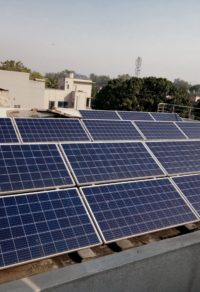
DO SOLAR PANELS WORK IN WINTER? Temperatures do not drop in winter because the earth is farther from the sun, contrary to popular belief. The earth is farthest away from the sun in July and closest to it in January. So, what does this mean for your solar panels as the weather cools? We’ll answer any questions you have about how a solar panel installation works in the winter. DO SOLAR PANELS WORK IN SNOW? If you’ve ever wondered, “Will solar panels work in cold climates during the winter?” you’re not alone. Many people believe that solar panels do not work during the winter, but this is a myth. Solar panels work just as well during the winter as long as they are not covered in snow for an extended period (yes, even in the snow). Although heavy snowfall can reduce sunlight penetration, panels produce more electricity in winter than you might think. Anti-reflective glass designed to absorb maximum sunlight covers the silicon on premium solar panels, generating more electricity. This means that solar panels generate more heat from the sun than the surface of your roof. That heat melts snow faster than it does on your roof, allowing your solar system to continue producing power even when there is heavy snow on the ground. In many cold climates, winter precipitation is limited to a few days. Between November and March, Denver, Colorado, receives between two and three days of snowfall totaling more than 0.1 inches. Snow melts in a matter of days, especially on solar panels! Furthermore, solar panels are designed to withstand 20 to 40 pounds of weight per square foot, so snow is rarely a threat. During the manufacturing process, all solar panels are subjected to pressure tests to determine quality and durability. And, because ratings vary by a panel, you can choose higher pressure ratings if you live in a snowy area. DO SOLAR PANELS NEED WINTER MAINTENANCE? The great thing about solar panels is that they require little to no maintenance for the majority of the year, including the winter. If you live in an area that experiences heavy winter storms — think polar vortex level — you may want to hire a professional to remove wet, heavy snow from your roof if you’re concerned about roof safety. CellSol Energy takes extra precautions by installing snow guards in areas where snow can accumulate and cause damage. Solar battery storage is also an important consideration during the winter — and throughout the year. This is because a battery allows you to store energy regardless of daily production. Battery storage works by collecting all of the electricity generated by your panels and storing it in your home rather than sending it back to the power grid. As a result, you can use that stored energy when you need more power than your panels can provide, such as at night or on cloudy days. HOW EFFECTIVE ARE SOLAR PANELS IN WINTER? Remember this important fact about solar energy: it is not about warmth — it is about sunlight. Summer solar power generation vs. winter solar power generation may surprise you. Because solar panels work more efficiently in cooler temperatures, cold, sunny weather is an ideal time to generate energy for your home. The industry-standard specifications for PV systems are made at 77oF, but they perform even better in colder temperatures. Even in the coldest temperatures, when the sun shines, solar panels produce the electricity you need to become more self-sufficient by generating your power. LOOKING FOR SOLAR INSTALLERS IN YOUR AREA? Even wind, cold, rain, and snow can’t keep solar panels from doing what they do best: generating clean energy to help you live more sustainably. And now is a great time to invest in a solar-powered home so that your installation is ready for the long, hot summer days. If you’re ready to make the switch, we’re here to assist you. CellSol Energy, a leading residential solar installer in Pakistan, has outfitted numerous homes and commercial businesses with solar, and we perform safe, contact-free installations to protect you and your family from COVID-19 spread. Contact us today for a no-obligation consultation, and we’ll get your home on the path to clean energy.
02Nov
Agrivoltaic solar farms have “amazing” rewards in addition to energy generation
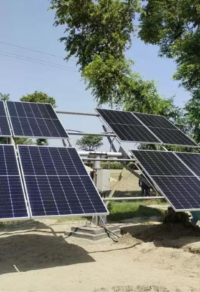
Crops are raised beneath solar panels in a process known as agrivoltaic farming. According to scientific studies, several crops do well when produced in this way. By doubling land use in this way, we could both feed the world’s expanding population and provide sustainable energy. The researchers say that by making next-generation solar parks a reality, they can assist in resolving Solar’s rising land-use problem by allowing electricity, food, and water production to coexist on the same plot. Possible for plants and panels to coexist In agrivoltaic solar parks, photovoltaic (PV) panels are placed farther apart to let more sunlight reach the ground and are raised higher in the air to allow for the rearing of crops or even small animals like lambs. Studies have revealed that when set up properly, this strategy can really give a variety of benefits, including protecting plants from extremes in heat, cold, and UV ray damage, which boosts the yield of several crops. The panels can also aid in conserving limited freshwater supplies as the world’s temperatures rise by lowering soil and plant evaporation. According to Randle-Boggis, a research associate at the University of Sheffield, any evaporation that does take place beneath the panels has the additional benefit of cooling the PVs and increasing their capacity to generate electricity Agrivoltaics see three-thousand-fold increase in capacity Countries are vying to increase their solar capacity as the world strives to achieve net-zero emissions by 2050 in accordance with the Paris Agreement and Europe wants to lessen its dependency on Russian hydrocarbons in the wake of the invasion of Ukraine. The EU plans to treble its capacity over the next three years, while the UK is shooting for a five-fold increase by 2035. However, rural communities and farmers are increasingly opposing solar projects and refusing to grant them planning permission. They are concerned that the PV arrays will “blight” the local landscape and remove productive farmland from the workings, and they also believe that solar projects will harm the environment. In order to resolve these land-use problems, a growing corpus of research is demonstrating how the empty space beneath solar panels can be used in ways that are advantageous to both people and the environment. At a more fundamental level, this would entail establishing flowering meadows next to PV arrays to provide habitats for pollinators, which might enhance biodiversity and possibly even boost agricultural productivity in nearby fields. Though yields are lower, agrivoltaic plots are more productive. An agrivoltaic project’s capacity to produce food and energy depends significantly on its location, the crops it grows, and how the panels are arranged. In order to avoid depriving the crops of the limited sunshine that is available, farmers in darker, colder nations like Germany or Denmark must use fewer panels and place them further apart . Here, energy and crop outputs are typically a little bit lower than on a plot of land used only for agriculture or solar power. Although an agrivoltaic plot produces two separate outputs simultaneously, its overall production is still higher. He claimed that even a slight yield drop was preferable than doing nothing. It’s about striking that equilibrium that is economically ideal. Researchers are also working with cutting-edge technology to increase the production of agrivoltaic systems in light-starved regions, such as semi-transparent solar panels, vertical photovoltaic “fences,” or grow lights installed on the underside of conventional panels.
02Nov
Approaches to Solar Energy Harvesting
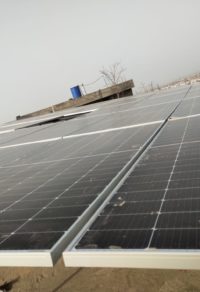
The solar panels you see on home rooftops are most frequently linked with solar energy collecting. However, the commercialized acceptance of solar energy harvesting covers a wide range of uses that give the globe incredible amounts of energy. Let’s examine five avant-garde methods for capturing solar energy. Photovoltaic Solar Panels PV solar panels use the energy of the sun to produce an electricity flow. Currently, this method of using solar energy is the most popular. These panels are made of several PV cells that are organized in a complex matrix and range in size from a few square centimeters to a few square meters. It seems sense that more solar energy would be captured if sunlight could reach a bigger surface area of the PV cells. A compound semiconductor wafer structure, which may be monocrystalline or polycrystalline, makes up the majority of each PV solar cell. The two thin semiconductor wafers of the structure, one P-type and one N-type, are produced independently. When the two wafers are stacked on top of one another, the two semiconductor kinds naturally react, creating a depletion zone that eventually reaches equilibrium without producing any electrical current. The PV cell causes an equilibrium disruption in the depletion area when light photons pass through and contact with semiconductor wafers, releasing enough energy to do so. The result of that action is a transient electricity flow. Over the whole surface of the PV cell, a single photon interaction generates power. It is combined to create a full solar cell panel and eventually a sizable PV panel array. A considerable amount of electricity can be produced by repeating and multiplying this small interaction in the depletion zone. However, PV solar arrays generate DC power. This DC energy needs to be transformed into AC power with the help of an inverter in order to be used with current power transmission systems, such as the outlets in your home. This fundamental technology has undergone a number of proprietary modifications that aim to improve the molecular efficiency of each PV cell, the panel’s construction, and the panel’s integration capabilities. Harvesting Thermal Energy from Electromagnetic Radiation The sun emits a wide range of energy with a variety of wavelengths, including infrared. To bodies that can absorb it, this spectrum effectively transfers thermal energy. As the color black absorbs all wavelengths of radiation that are visible to the human eye, substances that can efficiently absorb this thermal electromagnetic energy are known as “black bodies.” All of the electromagnetic radiation’s wavelengths can be properly absorbed and emitted by an ideal black substance. Long before the invention of current passive heating systems like thermal solar panels and thermosiphons, electromagnetic radiation was employed for heating in a variety of passive heating systems, including the egg-cooking example, Roman bathhouses, and Ancient Egyptian residences. These thermal solar energies collecting techniques heavily depend on the properties of black body radiation, specifically their capacity to absorb and transmit electromagnetic radiation. Thermal energy is most frequently obtained for use in home water heating systems. These options, however, are less suited for energy production on an industrial scale. Solar Water Heaters A solar water heater is an excellent illustration of a thermal solar energy harvesting application that is frequently used in sunny locations worldwide. A pump is used to move cool water through a black body panel in the most basic solar water heater configuration. This has a similar aesthetic to a photovoltaic solar panel because the black surface effectively absorbs thermal energy, which is subsequently cooled by the moving water and used to heat the water. Throughout the sun activity, the water is continuously pumped through this loop to produce warm water. By leveraging the buoyancy that the heated water creates, some systems are able to do without a pump mechanism. The colder water sinks while the warmer water “floats,” generating a system with little flow and a thermosiphon. Vacuum Tube Solar Water Heater Vacuum tubes and self-contained heat pipes are used in more sophisticated and effective solar water heating systems to transport thermal energy to a secondary tank. Radiant energy can enter the system with the help of the vacuum tube, but all thermal energy conversion occurs inside the tube. This energy is absorbed by the heat pipe and then transferred to the big water tank. Due to the tiny amounts of thermal energy that escape the vacuum tube and the virtually complete conversion of radiant light into thermal energy, these systems are substantially more effective in heating water during the colder months. Molten Salt Solar Power The limits of solar energy-based power generation are being pushed by relatively recent advances in molten salt systems. Molten salt power plants, on the other hand, use electromagnetic radiation to melt salt, similar to the solar-powered water heating systems that were previously mentioned. After being passed to a heat exchanger, the molten salt heats water into steam, which is then used to power a steam turbine. In order to focus sunlight on a single location, sometimes referred to as a power tower or central tower, molten salt power facilities. The Future of Solar Energy In place of fossil fuel-based electricity, solar energy collecting technology is being used more and more. Solar energy harvesting techniques come in a variety of forms, but they all essentially rely on the sun to carry out tasks in a desired way—tasks for which we typically use electricity. The productivity of solar energy harvesting activities will continue to be revealed through efficiency improvements and process optimization, and it may be possible to completely do away with the usage of fossil fuels.
02Nov
Reasons to Install a Solar Panel in your home
Many of us associate solar energy with being expensive or unaffordable. We accept the fallacy that only those in affluence can afford such luxuries. Many people are unaware of how much money you may save by making a savvy investment in solar energy. In addition to the existing 30% federal tax credit, many states additionally provide financial assistance to help you install a solar energy system at your residence or place of business. Even if the majority of us don’t always have the cash on hand, there are a number of environmentally friendly banks that also provide excellent rates on loans for investments that benefit the planet Earth. You may get a solar energy system from Big Dog Solar that will provide you with numerous advantages. Reducing the monthly cost of energy savings The long-term cost of a solar system is far cheaper than the average power bill, regardless of whether it is paid for totally up front, over time, or through a combination of both. Particularly in places where the energy company levies a high kw/hour rate Additionally, after any funded portion is fully paid off, you effectively receive power for nothing and make no further payments. Your house can become off-grid Coal and other fossil fuels may be a significant source of traditional electricity. Given that burning fossil fuels releases dangerous greenhouse gases and other air pollutants, the energy they provide may be bad for the environment. Additionally, their resources are few, which can cause a market that is unstable and unpredictable in terms of energy pricing. However, using solar power can increase your dependence on the sun for electricity. To help your home become independent from the grid, you can invest in solar power equipment. The sun can supply your house with enough electricity at a constant rate. Additionally, it might aid in defending you against the utility price increase’s unpredictability. Solar energy tax benefits The real incentive for purchasing a whole-home solar system, then, is as follows. Currently, the national government is offering a tax liability credit. So what does this actually mean? In essence, it implies that the government is aiding individuals who own homes and businesses in paying for solar energy systems of their own. You might also be eligible for other incentives, like as utility rebates and taxation credits, depending on where you reside. Even some governments provide tax subsidies to lower the initial cost. Insulation Against Increasing Energy Cost It is a simple fact that electricity prices increase yearly. It might be anything between two and eight percent, depending on where you live and the particular year. Any increase in price is disliked by everyone, but when it comes to a necessity, it can be more difficult to take. You can shield yourself from those inescapable hikes by installing a solar energy system. Even when solar consumers must finance their complete system, having a single monthly payment that is simple to budget for makes life a lot less difficult. Your monthly discretionary money will go up much more after the system is fully paid for. Solar Power Can Raise Home Value Although home solar energy systems have a very small share of the market, they are undoubtedly expanding, and quickly. Home buyers increasingly prefer for properties with solar systems as the market adopts solar technology due to the numerous advantages outlined above. For every Rs 200,000 in annual running expense reductions, depending on where you live, you could get up to millions in property value. The average increase in resale value per watt of solar energy installed in a home is. For instance, if your property has a 3.8KW system, you’re increasing its value by Rs70,0000. Solar energy is more affordable than the power grid Contrarily, rooftop solar energy offers a one-time investment for your home while thermal energy production is more expensive. In India, where solar technology has advanced significantly, it is now adequate to supply all of a person’s daily electricity needs. By producing solar electricity at home, a person can save money. It is a better choice for consumers to meet their electrical needs given the ongoing increase in electricity prices. India and other developing nations give homeowners a good Return on Investment and more financial stability. Energy independence Although Pakistan is now referred to be an energy producer, the absence of adequate infrastructure could lead to a power deficit in many rural and urban parts of the nation. Your house can benefit from an independent energy structure thanks to solar installation without you having to spend a fortune on standard power grid lines.
02Nov
Three things to think about before choosing a solar battery
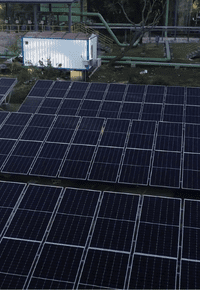
For many peoples, the past few years have been unpredictable due to everything from wildfires to storms. Homeowner interest in alternate energy sources like solar batteries is rising as they get weary of being caught off guard. The time is ideal as technology gets more accessible, more accessible, more affordable, and even more personalized in certain respects. With solar and storage, homes may produce their own electricity and utilize it as needed. They can use the power they have stored during the day to lessen their reliance on the electrical grid, or they can store it for use during a power outage. New system sizes for the home energy storage system are recently released by Cellsol Energy. A home solar storage system of any capacity is now much more feasible because homeowners can select between a 13 kWh, 19.5 kWh, 26 kWh, or 39 kWh to best meet their energy and financial needs. But it’s important to remember that not all solar batteries are made equal, and quality and adaptability are essential to getting the most from your investment. Consider the following factors while looking for a solar battery: How to control the battery power you have stored The solar battery and the Hub, which are both simple to control, are the two primary parts of the SunVault Storage system from CELLSOL ENERGY. SunVault can handle all of your needs, including storing extra solar energy for use in power outages, scheduling it to come on during periods of high demand, and assisting you in avoiding time-of-use prices. It can automatically detect utility outages so you can easily switch to backup battery power. How solar batteries are created How safe are solar batteries? Certain substances are safer than others. It’s crucial to look at the battery type being used when choosing a solar battery provider. One of the safest battery chemistries available is used in SunVault, which is composed of Lithium Iron Phosphate (LFP) chemistry. Lithium Iron Phosphate batteries are superior for home usage since they are made of materials that are more stable and environmentally benign than those found in conventional batteries. Capacity of a solar battery The SunVault Storage System from CELLSOL Energy has the capacity to power your entire house in the event of a power outage. Depending on the size of your system, you may decide whether to use the clean energy you’ve collected to run necessary appliances like your refrigerator or even non-essential ones like charging your electric car. Even running numerous appliances simultaneously is possible. This is due to the massive solar battery used by SunVault having more charge cycles than traditional systems. Does your solar battery have a reliable warranty? As part of the Complete Confidence Warranty, which protects CELLSOL Energy’s solar systems, SunVault comes with a 10-year warranty from the company. This is something to think about if you’re still debating whether or not to purchase a solar battery this year. Recently completed analysis demonstrated how effective distributed solar + storage was in recent years. This year, rolling blackouts were expected by locals, but to everyone’s relief, none occurred. What’s different about 2022 from the previous few years, you’re probably wondering. The state’s solar battery capacity holds the key to the problem. Homeowners in Pakistan have quickly boosted the adoption of solar storage, going from 30,000 linked batteries in 2020 to over 50,000 solar batteries today that can provide many MW of solar power, in just two years. In other words, the deployment of solar batteries can halt a power outage in its tracks with the widespread adoption of better, cleaner energy options. Consequently, acquiring a solar storage system can provide you a lot of benefits, whether you want your family to have peace of mind or you want to take a more charitable approach to enhancing the electrical grid in your town. This is especially true if you choose the appropriate provider.
05Feb
CELLSOL’s Initiatives for transforming Customers from Conventional Energy to Low Price Solar Panels in Pakistan
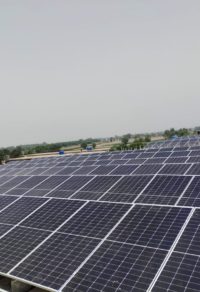
Pakistan is stuck with an energy crisis for two decades that restrict its economy from reaching its altitude. Moreover, the country is facing load shedding due to less availability of power plants and high pricing of fuel. Now a day’s fuel prices become extremely high which makes electricity bills for homeowners almost unaffordable and these factors become core factors for CELLSOL Energy to establish its business and provide low price solar panels in Pakistan. Developed countries like China, Russia, USA are working for a long time on renewable energy resources to meet their energy demand in which solar energy is a prime resource accomplish to their energy demands and needs. Solar energy is the most cost-effective as compared to any other form of renewable energy resource because the system that converts solar energy into electricity can be manufactured very economically. Due to the severe energy crisis and high cost of electricity bills, CELLSOL ENERGY decided to tackle the energy crisis by providing solar-based electricity as a subsite of expensive electricity generated from the fuels. Before 2011 CELLSOL is providing its services in telecommuting sector since 2007. CELLOS energy has the mission of facilitating cost-effective and environment-friendly energy to a homeowner with a vision of Synergizing green energy all over Pakistan. CELLSOL is one of premium company who are facilitating its customer low price solar panels in Pakistan. CELLSOL Energy has diverse and vast experience in solar energy services like Carports, Flat roof systems, slanted rooftop systems, etc.
05Feb
How CELLSOL Energy promoting low price of solar panels in Pakistan
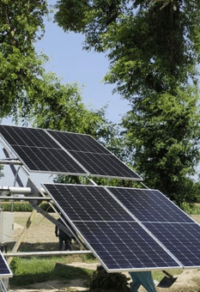
Cost-Effective Substitute for Conventional Electricity Sunrays are a most precious gift and blessing of nature which not just facilitate us with light but are also essential for our crop growth, rain-creating system, wind direction, and human survival. CELLSOL Energy aims to utilize the abundant resource of nature for electricity demand and is committed to manufacturing low-price solar panels in Pakistan with superior quality which will be very affordable and cost-effective than conventional electricity. Now a day’s availability of fuel and its logistics become very strenuous. In this scenario, solar energy is the most appropriate solution for the homeowner’s electricity needs that CELLSOL Energy is committed to accomplishing. Environment-Friendly Electricity CELLSOL Energy is facilitating homeowners with solar energy which is not just low price solar panels in Pakistan a but also environment-friendly energy. By generating electricity through solar energy, the carbon and greenhouse gas emission becomes zero, which is extremely harmful to human health. Pakistan is the most affected country by floods and increases in temperature due to global warming so, CELLSOL is putting its continuous efforts to make the environment clean and green. Producing electricity through solar energy is estimated that it can reduce the carbon footprint of your home by 80%. Improvising Customer’s Self Reliability CELLSOL Energy is making its efforts in such a way that the customer has up-to-date knowledge regarding the product and firm services. With having how know regarding products and services of a firm the customer become able to solve their problems on their own. With this strategy, the customer feels more empowered and self-independent when they require less assistance from the firm. CELLSOL Energy understands that contacting us is an interruption in your day, so we equipped you with self-dependency rather than relying on us. CELLSOL Energy is not just utilizing their resources for manufacturing low price solar panels in Pakistan but also persistently works on its online support services that will resolve the client’s problem without any kind of ambiguity along with a quick response. Utilizing Proactive Approach CELLSOL Energy’s customer care is continuously engaging in addressing the issues, answering the questions, and feedback, and facilitating the solutions regarding any kind of problem. Whenever customer contact CELLSOL Energy’s customer care we always make sure to resolve their problem on most priority bases. Generally, when a technical error is bought to our team, we do more effort into the systems of the homeowner who contacted us. Our technical team deeply understands the problem of the customer and then facilitates the most suitable solution. Investing in Our Team CELLSOL Energy believes in providing quality after-sale service to its clients, to accomplish this mission is essential to provide its technical team continuous training and up-to-date knowledge that enhances their technical capabilities. That is the core reason behind investing in better tools and training to make sure that our customer care and technical staff develop expertise in our system.